Technology
Reasoning, on wheels.
A physical agent needs two things: the ability to understand a scene and decide what matters, and the ability to move through the real world to act on it. Zendar puts the two together on your site. Reasoning that keeps getting better, on navigation that is general, data-light and low-cost enough to make the economics of robotics work.
01 · Move · Zensight
General on every axis, not just one.
- Speed A full-size car on urban roads and highways
- Rules of the road A robot on bike lanes and sidewalks
- Conditions The same robot around a dark yard in the rain
01 · Move · Zensight
Generality has three axes: speed, rules of the road, and conditions. Most stacks get one. A sidewalk robot handles paths at walking pace with no traffic rules. A robotaxi handles traffic at speed, but only on paved roads. Zensight drives a full-size car on urban roads and highways, a robot on bike lanes and sidewalks, and the same robot around a dark yard in the rain, with the same sensors and compute.
Concept illustrations · one stack, the same sensors and compute in all three
- Data-light
Zensight fuses radar and camera early. Depth and velocity come from the radar natively instead of being inferred from pixels, so the model doesn’t have to learn the size, distance and motion of every object from fleet-scale data. A new site takes weeks.
- Dark, wet or foggy
Darkness, rain, fog and glare don’t stop the rounds.
- Built for unit economics
Inexpensive sensors, low data needs and low compute. Our radars are our own design, built from automotive-grade parts through the automotive ecosystem. That’s what makes a robot pay for itself on a site.
02 · Understand
AI that knows what matters.
Illustrative · things and conditions only
02 · Understand
The robot reasons about what it sees. AI on board watches every round in any conditions and decides what deserves a closer look. Deeper analysis runs only on what it flags. On a patrol, that turns a night of footage into a few minutes of flagged clips. In a container yard, IDs are read on the robot and only the hard cases get a second look.
The result is less to review, more that’s actionable, and a cost per site that keeps falling.
- Searchable footage
Every round is recorded. Ask in plain language, like “every time the north gate was open after 10 pm,” and get the clips.
- Findings, not footage
Structured records your team can use: IDs, conditions, locations and timestamps.
- Tuned to each mission
Knows what matters for inspection, asset tracking and patrol, and flags what changed since the last round.
03 · Supervise
One Mission Control, every site.
- North Campus3 robots · 1 shuttle
- Yard 22 robots
- Distribution Center2 robots · 1 shuttle
| Unit | Mission | State | Battery |
|---|---|---|---|
| R-01 | Inspection round | On route | |
| R-02 | Asset tracking | On route | |
| R-03 | Patrol | Docked · charging | |
| R-04 | Inspection | Next run 22:30 | |
| S-01 | Campus loop | On route |
- Drive
- Sensors
- Compute
- Dock link
- 22:00Warehouse aisles
- 22:15Labs · east door
- 22:40Yard cabinets
03 · Supervise
Every Zendar robot and shuttle reports to Zendar Mission Control, where one operator supervises every robot and shuttle at once: routes, schedules, health and every finding, across every site. It’s how we keep a fleet reliable without a Zendar person on your site, and it never sits in your alert path.
- One screen, every siteRobots on every mission, and shuttles, supervised from one place.
- Fleet healthDocking, charging, routes and maintenance handled by Zendar, not by your team.
- Always currentRoutes and schedules updated as your site changes, without a visit.
04 · Deliver
Findings land where your site already runs.
- What
- Condition or asset, with its ID
- Where
- Site · building · location
- When
- Time of the round
- Evidence
- Photo · clip
- Mission
- Asset tracking · inspection · patrol
Container and trailer locations from each asset-tracking lap update the system your yard already runs on.
Inspection findings open tickets with a photo, a location and a time, in the tool your facilities team uses.
Alerts, searchable footage and records, and a live site map for everything else.
04 · Deliver
Nothing a Zendar robot finds should need a new screen to watch or a person to re-key it. Asset tracking updates your yard management system. Inspection issues open as work orders with a photo and a location. Alerts reach the people on shift. The robot becomes part of how the site runs, not another system to check.
Safety
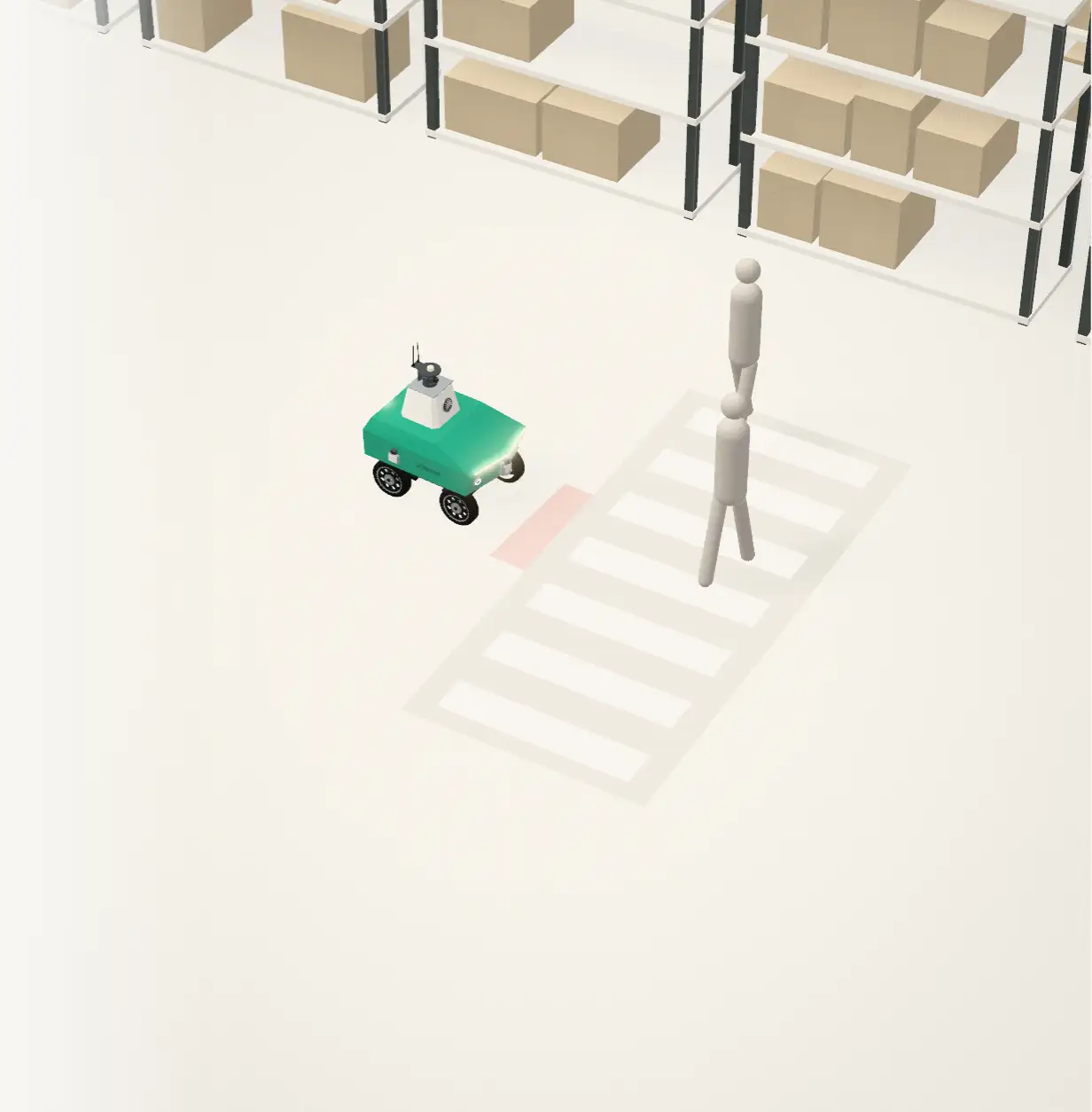
Built to move among people.
- Pedestrian detected
- Yielding
- Continuing route
DRAFT · generic safety language, to be replaced with the safety strategy.
Safety
Our robots and shuttles share space with people every day, and we treat that as the first requirement, not a feature. Speed is limited near people. Every robot can stop safely on its own. Every route is walked and approved before a robot runs it, and Zendar Mission Control supervises every robot and shuttle in motion.
DRAFT · generic safety language, to be replaced with the safety strategy.
Where the rounds go
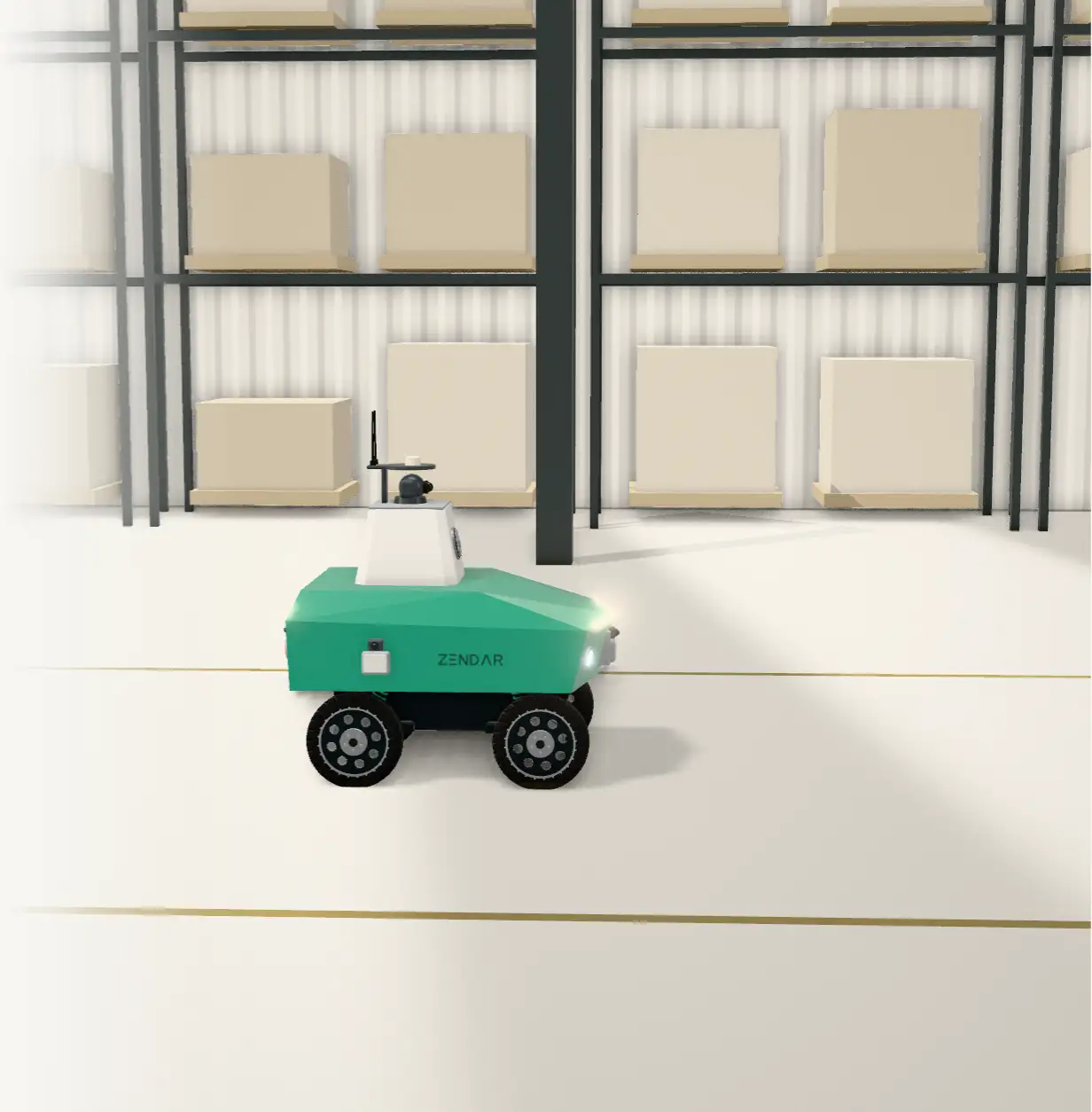
The same robot, wherever the round takes it.
Illustrative scenes · operating conditions are confirmed site by site
Get started
See what your site could tell you.
Walk your site with our team. We’ll map the rounds worth automating and what each one would deliver.